Home / Selected Work / Brand & Customer Strategy

Fidelity Investments: Brand & Customer Strategy·2019–20
- Global Brand Strategy
- Customer Strategy
- Brand Measurement & Governance
Making the case for where Fidelity’s next investors already were.
Personal Investing needed the next generation of investors and had almost no brand presence where they were learning about money. I built the case, the audience and content strategy, and the compliance path for Fidelity’s first Instagram, which went live in June 2020, and used the same playbook for Reddit, Pinterest and Spotify.
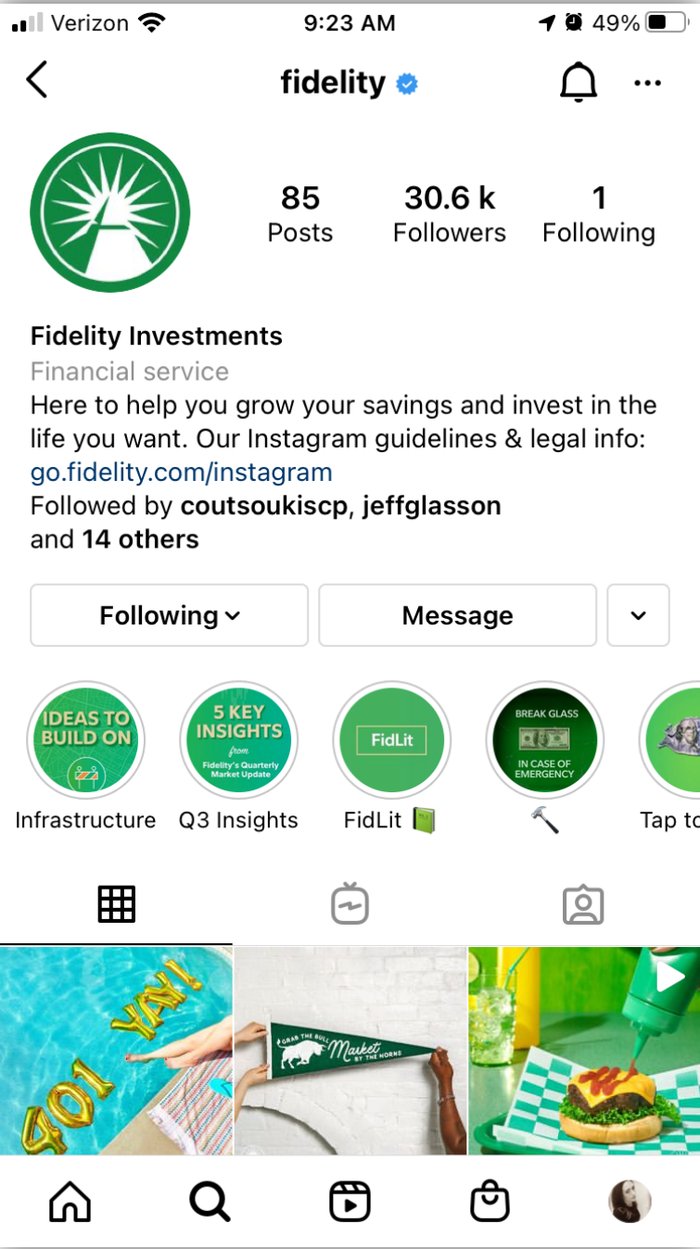
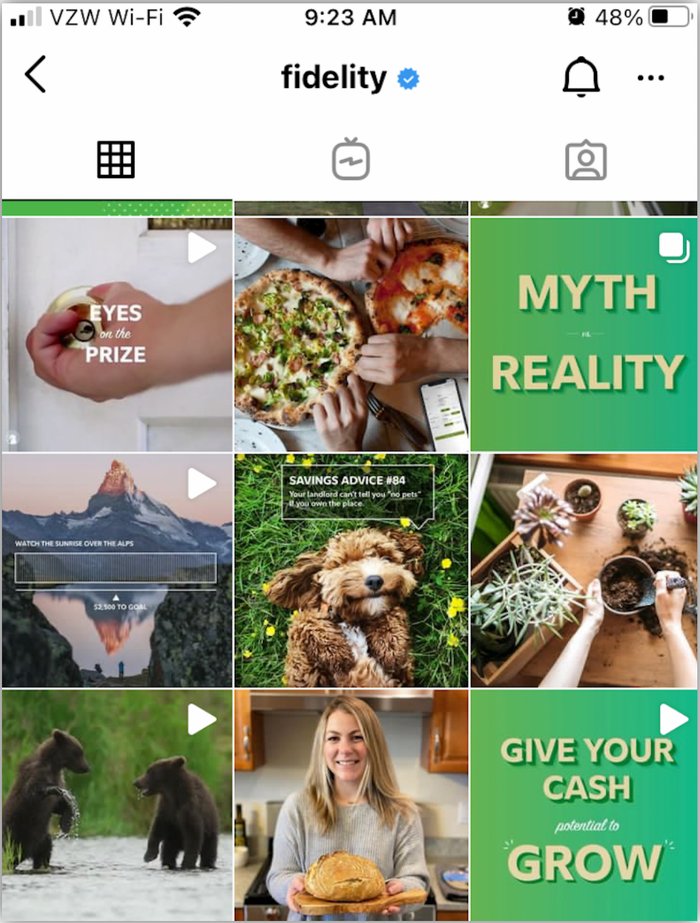
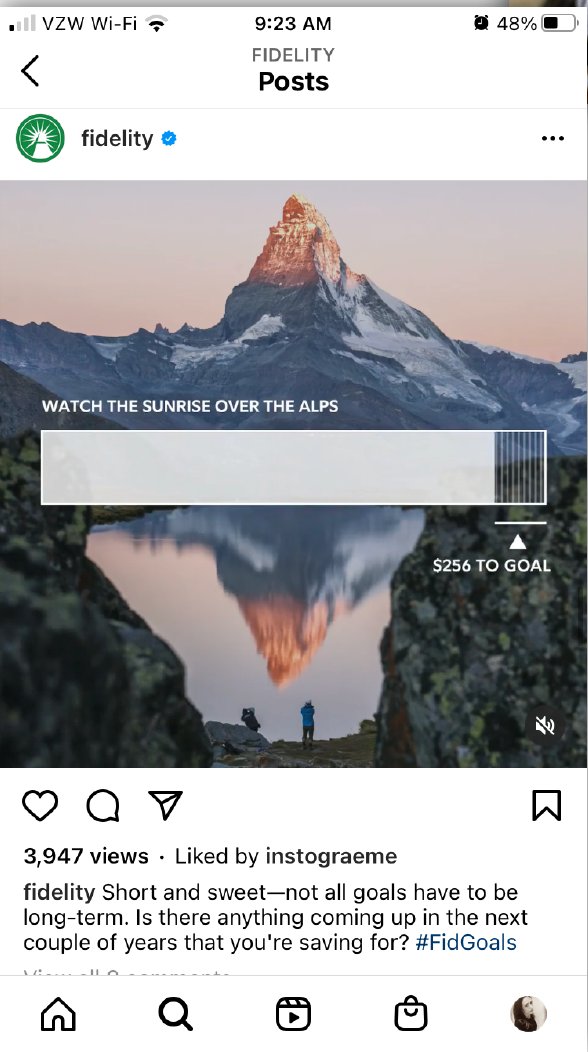
Public screenshots from September 2021, after my tenure; the account is now @fidelityinvestments.
The opportunity
In 2018 Fidelity set out to evolve its social media marketing, and Personal Investing increasingly looked to the next generation of customers to sustain the business. That generation was learning about money on Instagram. Competitors such as Schwab were further ahead in social; Fidelity, one of the most trusted names in finance, had no Instagram presence at all.
Two things stood in the way. In a regulated category every post is a potential disclosure and every comment a potential record. And social ran business line by business line, so the brand showed up differently from one handle to the next. The question wasn’t whether to be on Instagram. It was how Fidelity could say yes, and stay consistent once it did.
The insight
Fidelity had considered Instagram before; I found an internal proposal from 2013. Every prior proposal had pitched a channel. What was missing was the thing that lets Legal, Risk & Compliance and the business lines agree: an audience-led reason to be there, a content plan each business could see itself in, and an operating model that answered the regulatory questions before they were asked.
Stop pitching a channel. Build the path to yes.
What I did
Made the case
I wrote the Instagram recommendation and the business case for it: who we would reach, why that audience mattered to Personal Investing, and what competitors were already doing there. Paid budgets sat with the media team and agency, so my job was to define the strategy that spend would run against, and to get the business lines to back it.
Built the audience and content architecture
I mapped content to the business and customer needs it had to serve, not to post types: brokerage and active traders; next-generation investors; retirement; savings and life events; wealth management; enterprise brand; and associates and talent. Each business line could see its customers in the plan, which is what turned interest into support.
Phased it: crawl, walk, run
Crawl: launch organic, on approved content pillars, with Legal, Risk & Compliance review built into the calendar. Walk: add paid support by business line in formats made for the feed, such as Stories with a swipe-up call to action. Run: always-on, audience-led paid and organic, with measurement feeding back into the plan.
Wrote the operating model
Permissioning and records retention with Legal, Risk & Compliance; associate guidelines; hand-off rules with customer care. I also wrote the framework that separated social engagement from social care, and the case for building the engagement function: a phased roadmap with the platform requirements, from records retention to moderating comments under paid posts, that a regulated firm needed.
Brought the organization with me
Personal Investing marketing and its business lines (brokerage, retirement, wealth management, student debt and women investors); Legal, Risk & Compliance; brand creative; customer care; the media team and our social and media agencies; listening and platform vendors; talent marketing; and U.S. and Canada social practitioners, whom I convened into a standing council.
What changed
Instagram went live in June 2020.
Seven years after the first internal proposal, Fidelity had a brand presence where its next investors were, with content mapped to its business lines and a compliance path that let it publish. It is still running: 211K followers and 975 posts today on @fidelityinvestments.
What it taught the organization.
The launch showed what was still missing. I documented it for marketing leadership as seven changes: put social strategy and budget with the people who had the expertise; build an engagement function distinct from social care; move to a platform that met regulatory retention needs; and give the brand one consistent identity across every handle, which it still lacked.
What it made possible next.
The same playbook, an audience-led case, a content plan each business could see itself in and a path through Legal, Risk & Compliance, carried the next asks in parallel: Wealth Management’s first advertising on Pinterest, a Reddit test for new investors designed with Brokerage, and a paid-social extension of Retirement’s Spotify test, which wasn’t approved. How each played out →
The account went live a few weeks before I left Fidelity, so in-market performance belongs to the team that followed. Follower and post counts are public figures checked in September 2021 and October 2026; they describe Fidelity’s channel, not a personal result. Budget and internal performance figures are confidential and not published here.
“Elizabeth does not shy away from the complex and complicated, and revels in ensuring the details ladder up to the larger effort at hand. She is always aware that efforts need to show progress and that KPIs are the corner stone of continuous learning as new digital-first strategies and tactics are put into market.”
My role
Director, Paid Social Media, Personal Investing (2019–20); Digital Strategist (2018–19). The Instagram recommendation, business case, audience and content architecture, phased plan and operating model; one direct report; Co-chair, Strategic Communications, Fidelity Women’s Leadership Group (WLG); Board Chair, SocialMedia.org (Fidelity membership).
Built with
Legal, Risk & Compliance; Personal Investing marketing and its business lines; brand creative; customer care; the media team and our social and media agencies; talent marketing; and the platform partners.